
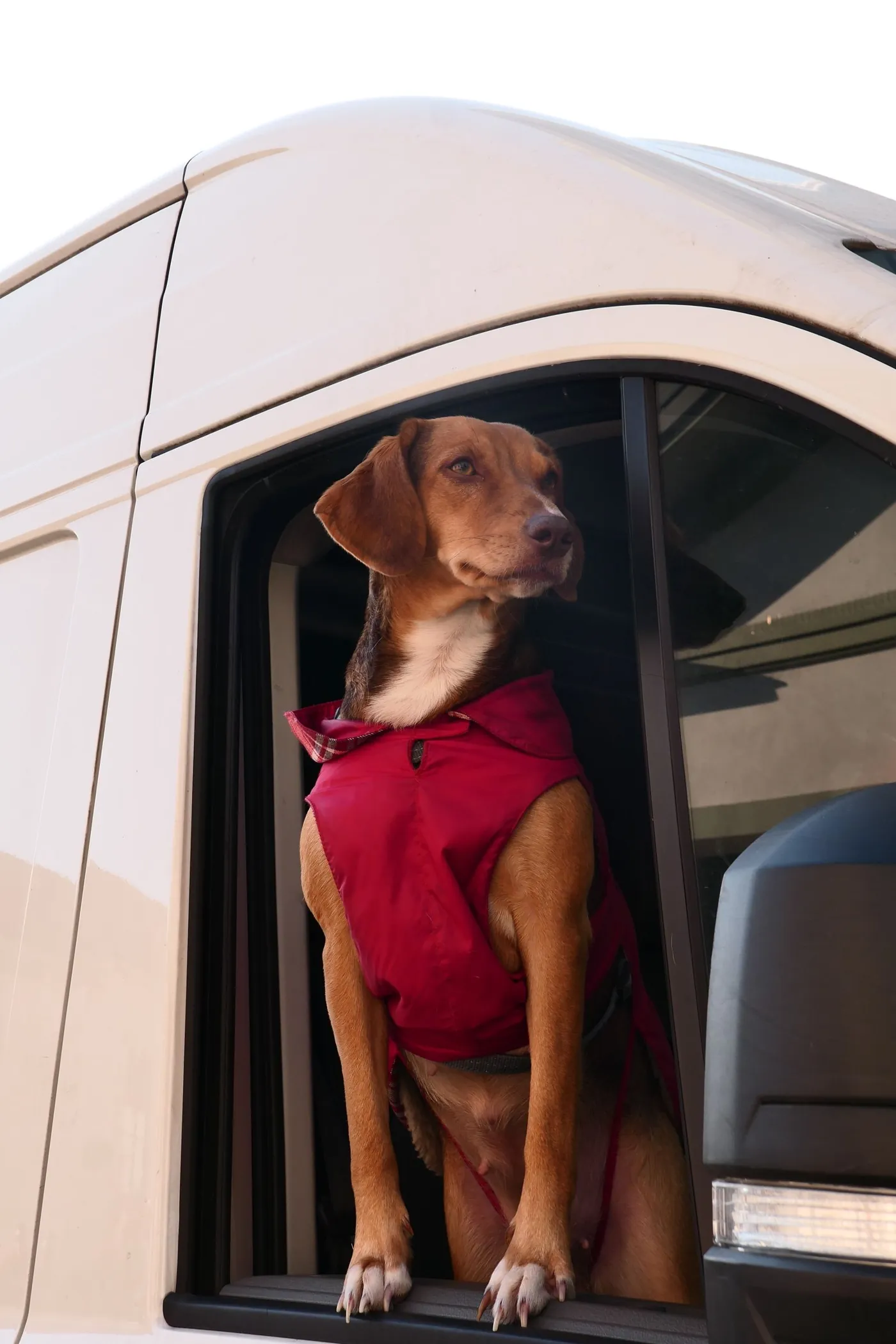
- The Pup Relief Tour connects groomers with families needing access.
- Training and institutional connections document work beyond social reach.
A neighborhood grooming business takes donated care on the road.
Brian Taylor already had the van. A 2018 New York grant had helped him buy it, he recalled in Groomer to Groomer. Two years later, the vehicle became part of an idea for taking donated grooming beyond his own neighborhood. Kathy Hosler’s November 2020 report.
Taylor, the founder of Harlem Doggie Day Spa, organized the Pup Relief Tour around a practical proposition: connect people who cannot afford an appointment with groomers willing to provide one. The evidence for that work runs through participating professionals, training partners and a shelter organization—not just an audience watching from a phone.
A tip becomes someone else’s appointment
Taylor’s route into pet services followed work in banking, according to his June 2020 Dog Save the People appearance. The episode describes a neighborhood business built around overlapping needs: grooming, care and the people bringing their animals through the door. The podcast’s account of his career.
When pandemic disruption reached the business, clients’ donations helped fund appointments for others. “My clients support me a lot,” he told Hosler in November 2020. His explanation for organizing the effort was direct: “I felt the need to give back.” The report records an initial six-city route and 55 Black grooming professionals signing up. The tour’s early organization.
The important detail is the network. A traveling founder can be in one place at a time. A group of local professionals brings equipment, working relationships and knowledge of its own community. Taylor’s contribution was organizing those parts into something people could join.
From appointments to instruction
The Paragon School of Pet Grooming documented a further stage in March 2023: a Pup Relief Tour training collaboration in Nigeria. Its account names accompanying groomers and describes the project as skills development. Paragon was a partner, so its account is evidence of participation rather than an independent evaluation of the program’s effectiveness. Paragon’s Nigeria report.
That distinction matters. Providing a service today and helping someone learn to provide it in the future are different contributions. The second needs its own questions about instruction, continued support and what trainees can do afterward.
From his channel: Taylor’s uploaded Over Night Hustle television appearance. This is a broadcast appearance shared on his own channel, not a flurrily interview.
The work enters a shelter
In December 2024, Urban Resource Institute announced a collaboration providing grooming for pets living with domestic violence survivors in its shelters. Its account records an inaugural December 17 event, including a full groom, baths and nail trims. Taylor’s stated premise was “Animals are part of the family.” URI’s announcement.
Here, pet care sits inside a larger service. URI’s People and Animals Living Safely program supports households entering shelter with their animals. Taylor’s team contributed a specific part of that care; the broader shelter program belongs to URI and its staff. The announcement also described plans for 2025. An announcement of future services should not be mistaken for a completed annual report.
Read the goals alongside the work
Taylor’s public GoFundMe account sets out his case for affordable grooming, training and expansion. It is useful first-person organizational writing on another platform, with an obvious fundraising purpose. Its ambitions describe what the project wants to do; the dated partner reports help establish what was actually documented. The organizer’s account.
For a pet owner, the useful question is how local access works: eligibility, available appointments, services included and follow-up. A tour can create opportunities. It does not establish that every neighborhood now has affordable grooming, or that a particular service is appropriate for every animal.
That is the continuing question behind the van: what has to remain in place after the event moves on?
For you: What do you remember about your first grooming client?
How we reported this: We have not interviewed Brian Taylor. This portrait uses trade reporting, a published podcast account, partner announcements and his public project writing. His organizing work is the reason for coverage. He is not a flurrily partner, and this is not an endorsement or fundraising appeal. Corrections and additional context are welcome.
Photos: 2128535630 on Pexels; Nicolas Bertapelle on Pexels; Goochie Poochie on Pexels; Pet Foto on Pexels.